Measurement
Seasonal Angles: Measuring the Sun's Altitude with a Protractor
A shadow is a record of an angle. Stand a cane upright on a bright morning and it throws a long shadow; do the same at midday in late June and the shadow barely clears the base. That difference is the Sun's altitude — the angle between the Sun and the horizon — and you can measure it to within a degree or two using a protractor, a ruler and some patience. It is a good project for a garden, a school yard or a south-facing patio, and it becomes far more interesting when you repeat it across the year.
Why the Sun's Altitude Changes Through the Year
The Earth's axis leans about 23.4° from the vertical relative to its orbit. As we travel round the Sun, the northern hemisphere tilts towards it in June and away from it in December. The consequence is simple to see: at local solar noon — the moment the Sun is highest — its altitude rises and falls over the seasons.
A useful rule of thumb for the UK is that noon altitude equals roughly 90° minus your latitude at the equinoxes, plus about 23.4° at the June solstice and minus about 23.4° at the December solstice. At 52°N that gives about 38° in late March and late September, about 61° in June, and only about 15° in December. Those numbers translate into very different shadows, and that is exactly what you are going to catch.
What You Need
- A straight vertical stick: a bamboo cane, a wooden dowel, or a metre ruler clamped upright to a block. Something 60–100 cm tall is ideal.
- A spirit level, or a plumb line made from a small weight tied to string, to check the stick is truly vertical.
- A tape measure or a long ruler.
- Chalk, string or masking tape to mark the shadow.
- A protractor, a sharp pencil and paper — A3 or graph paper makes the drawing easier.
- A notebook for dates, times and readings.
- A watch, and a compass if you want to check the direction the shadow points.
Step by Step: Finding Solar Noon
- Choose a spot that receives direct sun for at least an hour either side of noon, with a flat, firm surface — a paving slab, a board or a sturdy table. Fix the stick so it cannot shift between readings.
- Check it is vertical with the spirit level or plumb line. A stick leaning by 2° will affect your result, and it is an error you will repeat all year.
- Start an hour or so before noon. Mark the tip of the shadow every 10 or 15 minutes and write down both the time and the shadow length.
- The shortest shadow of the day points roughly north in the northern hemisphere and marks local solar noon. This is not the same as clock noon: British Summer Time pushes it an hour later, and the equation of time shifts it further, by up to about a quarter of an hour either way.
- Record the shortest length from the centre of the stick's base to the middle of the shadow tip, not the outer edge. The blurry penumbra around the tip can add a centimetre or more if you measure to the wrong part of it.
From Shadow to Angle
You now have two numbers: the height of the stick and the length of its shortest shadow. Together they define a right-angled triangle, and the angle at the base is the Sun's altitude. There are two ways to extract it.
Draw it to scale
On paper, draw a horizontal line to represent the shadow and a vertical line for the stick, using a scale such as 1 cm to 10 cm. Join the free ends to complete the triangle. Measure the angle between the shadow and the sloping side with your protractor. This is the safest and most satisfying method, because it never requires you to aim anything at the Sun.
Check it with a tangent
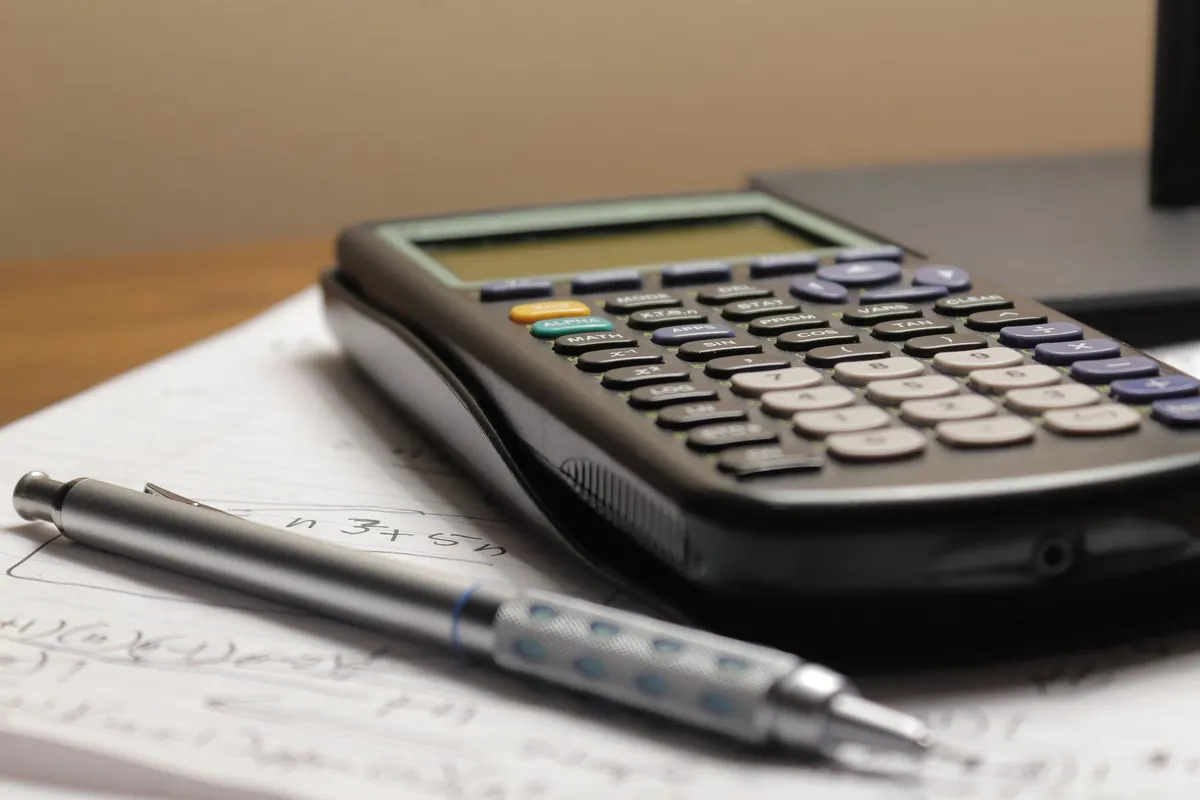
If you have a scientific calculator, altitude equals the inverse tangent of stick height divided by shadow length. A 1 m stick casting a 1.28 m shadow gives 0.78, and an altitude of about 38°. Doing the drawing first and the calculation second is a good habit: each method checks the other.
Comparing the Seasons
Aim for at least four dates: close to the June solstice, the December solstice and the two equinoxes. Monthly readings are better still. Keep a table with the date, the time of the shortest shadow, the shadow length, the stick height and the resulting angle.
The pattern is striking once it is on paper. At 52°N, a 1 m stick casts roughly 1.3 m at the equinox, around 0.5 m in June, and nearly 3.9 m in December. Plotted against the calendar, the altitude curve is shallow around the solstices and steepest through the equinoxes — which is why the change in daylight feels so rapid in March and so static in early July. Shadow lengths behave in the opposite way, stretching fastest as autumn turns to winter.
Sharpening Your Accuracy
The measurements are simple, but small mistakes compound over a year of readings.
- Take three readings around solar noon and average them rather than trusting one.
- Use the same stick, the same marks and the same spot all year.
- Measure along the level. If the ground slopes away, a tape laid over it will read long.
- Shelter the base from wind, or use a heavier block; a wandering stick tip ruins a good reading.
- Note the weather. A hazy sky gives a soft shadow edge, and it is worth writing that down so you can weigh the reading accordingly.
Doing It Safely, and Keeping a Record
Everything here works by shadow, and that is deliberate. Never look directly at the Sun, and do not treat sunglasses, smoked glass or a quick glance as harmless — the risk to your eyes is real and permanent, even when the Sun looks dim through cloud or haze. Keep sessions short in strong summer sun, wear a hat and sun cream, and keep an eye on younger participants who may be tempted to check where the Sun actually is.
For the record itself, give each month a page: the date, the time, the shadow length, the angle, a sketch of the shadow's direction and, if you like, a photograph of the chalk line. Over a full year you end up with a graph that explains rather a lot — why a greenhouse overheats in May, why a solar panel is angled steeply in winter and shallowly in summer, and why the same window feels bright in March and gloomy in November. It also turns an abstract idea about a tilted planet into something you measured yourself, one shadow at a time.
Photo: Zeliha C. / Pexels
Related Articles